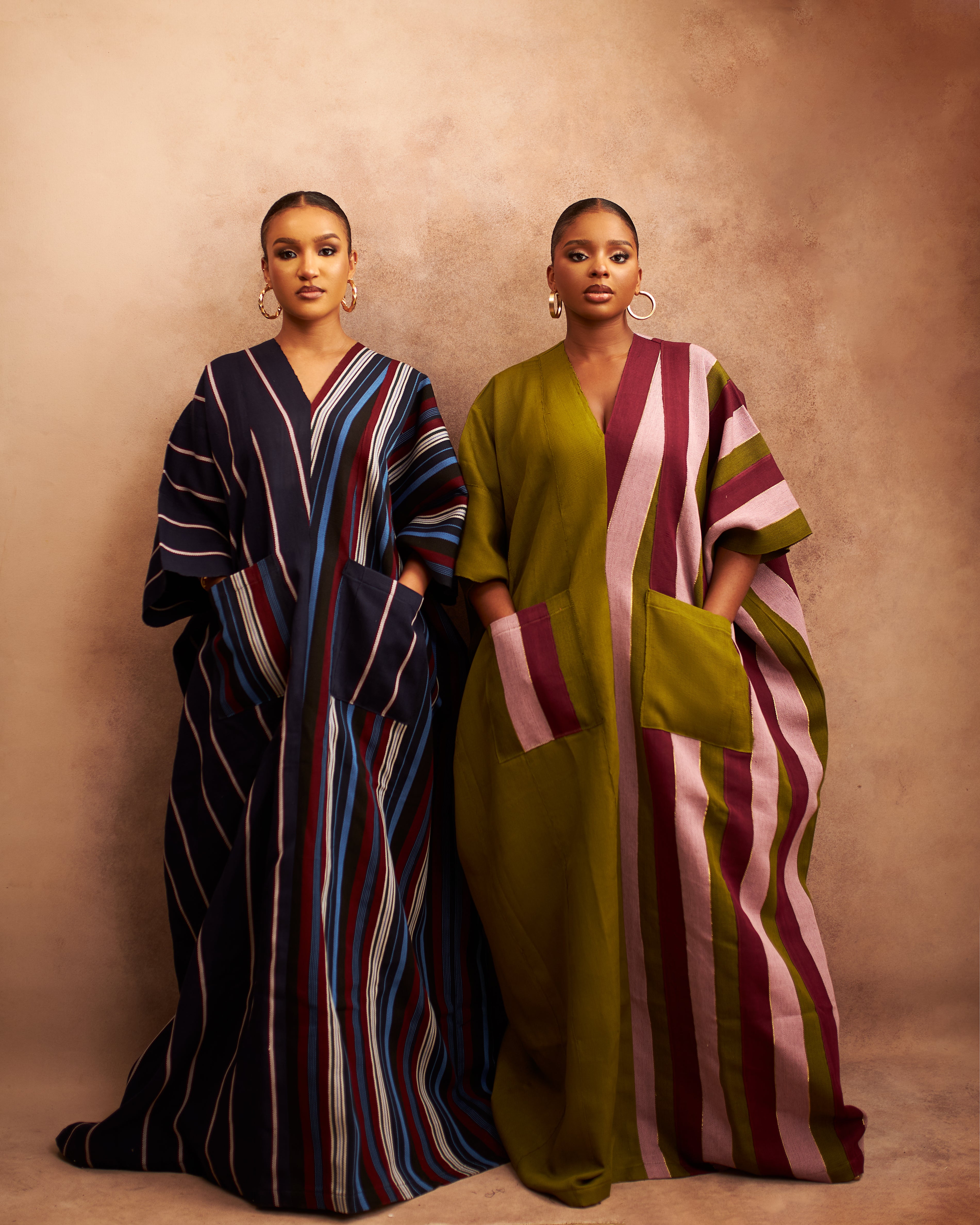
What Is Aso-Oke? The Story Behind Nigeria's Most Celebrated Fabric

Walk into any Yoruba wedding, naming ceremony, or owambe and you'll see it: the structured gele that catches the light, the crisp ipele draped over one shoulder, the agbada that moves like it has somewhere important to be. That fabric is aso-oke, and it has been dressing Nigeria's most important moments for centuries.
What does aso-oke mean?
Aso-oke (aṣọ òkè) is a handwoven cloth made by the Yoruba people of southwestern Nigeria. The name is often translated as "top cloth" or "cloth from up-country," and either way it signals the same thing: this is the fabric you bring out when the occasion matters.
How aso-oke is made
Traditional aso-oke is woven by hand on narrow looms, producing long strips of cloth only a few inches wide. Weavers then sew the strips together edge to edge to create a full piece wide enough for a wrapper, a gele, or an agbada. That strip construction is part of what gives aso-oke its signature body and texture. It holds a shape in a way printed fabrics simply can't.
Weaving towns in Oyo State, Iseyin above all, have carried the craft for generations, with skills passed down through families. Every finished piece represents hours of skilled work at the loom.
The three classic types
Sanyan. A soft beige or light brown cloth, traditionally woven from wild silk. Sanyan has long been considered one of the most prestigious aso-oke styles.
Alaari. A rich crimson or deep red cloth. Its bold color made it a favorite for celebrations and a symbol of status.
Etu. A dark indigo cloth, sometimes woven with very fine light stripes. Deep, elegant, and timeless.
Today weavers work in every color imaginable and add metallic threads, openwork patterns, and modern color combinations, but these three remain the foundation of the tradition.
How aso-oke is worn
For women, a classic aso-oke look combines the gele (head tie), iro (wrapper), buba (blouse), and ipele (shoulder sash). For men, it's the agbada (flowing robe), buba, sokoto (trousers), and fila (cap).
Aso-oke is also at the heart of aso-ebi, the tradition of family and friends wearing a chosen fabric together at a celebration. When you see a whole wedding party in matching colors, that's aso-ebi, and it's one of the most beautiful ways Nigerians show up for the people they love.
Designers today are taking aso-oke well beyond tradition: structured jackets, skirts, bags, and accessories that bring handwoven heritage into everyday style.

Caring for your aso-oke
- Follow the garment’s care label first. Fibre blends, dyes and embellishments vary, so check with your cleaner before treating a piece.
- Store it folded with acid-free tissue or rolled, away from direct sunlight, to protect the color and keep the weave crisp.
- Keep metallic and embellished pieces away from rough fabrics that could snag the threads.
- Avoid direct high heat. If the care label allows pressing, use a protective cloth and test a discreet area first.
Treated well, a good piece of aso-oke lasts for decades, and it often gets passed down.
Wear the story
Every piece of aso-oke carries the hands that wove it and the celebrations it has been part of. That's what we love about it, and it's why heritage craft sits at the heart of Iyayi.
Shop the Iyayi collection, and follow us on Instagram @iyayiofficial for more stories from Nigerian fashion.